—
Pulitzer Prize — History
Pulitzer — History
0 of 204 books read
History
204
Books
199
Authors
98,505
Pages
1917–2025
Span
2025
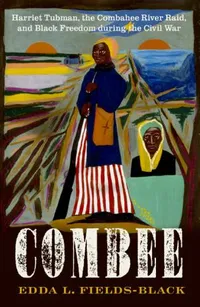
Combee: Harriet Tubman, the Combahee River Raid, and Black Freedom During the Civil War
Edda L. Fields-Black · 2025 · 849 pp
COMBEE is based upon original research and offers the first full account of Tubman's Civil War service and the Combahee River Raid. In the process, it also offers the story of enslaved families living in bondage and fighting for their freedom, and does so using their own distinct and individual voices.
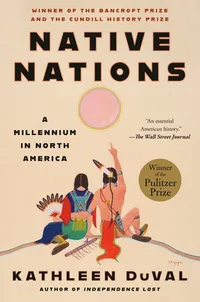
Native Nations: A Millennium in North America
Kathleen DuVal · 2025 · 753 pp
PULITZER PRIZE WINNER • “A magisterial overview of a thousand years of Native American history” (The New York Review of Books), from the rise of ancient cities more than a thousand years ago to fights for sovereignty that continue today WINNER OF THE BANCROFT PRIZE, THE CUNDILL HISTORY PRIZE, AND THE MARK LYNTON HISTORY PRIZE Long before the colonization of North America, Indigenous Americans built diverse civilizations and adapted to a changing world in ways that reverberated globally. And, as award-winning historian Kathleen DuVal vividly recounts, when Europeans did arrive, no civilization came to a halt because of a few wandering explorers, even when the strangers came well armed. A millennium ago, North American cities rivaled urban centers around the world in size. Then, following a period of climate change and instability, numerous smaller nations emerged, moving away from rather than toward urbanization. From this urban past, egalitarian government structures, diplomacy, and complex economies spread across North America. So, when Europeans showed up in the sixteenth century, they encountered societies they did not understand—those having developed differently from their own—and whose power they often underestimated. For centuries afterward, Indigenous people maintained an upper hand and used Europeans in pursuit of their own interests. In Native Nations, we see how Mohawks closely controlled trade with the Dutch—and influenced global markets—and how Quapaws manipulated French colonists. Power dynamics shifted after the American Revolution, but Indigenous people continued to command much of the continent’s land and resources. Shawnee brothers Tecumseh and Tenskwatawa forged new alliances and encouraged a controversial new definition of Native identity to attempt to wall off U.S. ambitions. The Cherokees created institutions to assert their sovereignty on the global stage, and the Kiowas used their power in the west to regulate the passage of white settlers across their territory. In this important addition to the growing tradition of North American history centered on Indigenous nations, Kathleen DuVal shows how the definitions of power and means of exerting it shifted over time, but the sovereignty and influence of Native peoples remained a constant—and will continue far into the future. “An essential American history”—The Wall Street Journal

2022
Covered with Night
Nicole Eustace · 2022 · 468 pp
WINNER • 2022 PULITZER PRIZE IN HISTORY Finalist • National Book Award for Nonfiction Best Books of the Year • TIME, Smithsonian, Boston Globe, Kirkus Reviews The Pulitzer Prize-winning history that transforms a single event in 1722 into an unparalleled portrait of early America. In the winter of 1722, on the eve of a major conference between the Five Nations of the Haudenosaunee (also known as the Iroquois) and Anglo-American colonists, a pair of colonial fur traders brutally assaulted a Seneca hunter near Conestoga, Pennsylvania. Though virtually forgotten today, the crime ignited a contest between Native American forms of justice—rooted in community, forgiveness, and reparations—and the colonial ideology of harsh reprisal that called for the accused killers to be executed if found guilty. In Covered with Night, historian Nicole Eustace reconstructs the attack and its aftermath, introducing a group of unforgettable individuals—from the slain man’s resilient widow to an Indigenous diplomat known as “Captain Civility” to the scheming governor of Pennsylvania—as she narrates a remarkable series of criminal investigations and cross-cultural negotiations. Taking its title from a Haudenosaunee metaphor for mourning, Covered with Night ultimately urges us to consider Indigenous approaches to grief and condolence, rupture and repair, as we seek new avenues of justice in our own era.
Cuba: An American History
Ada Ferrer, Noam Chomsky, Vijay Prashad · 2022
An original and compelling history, spanning five centuries, of the island that became an obsession for many presidents and policy makers, transforming how we think about the U.S. in Latin America, and Cuba in American society.














1989
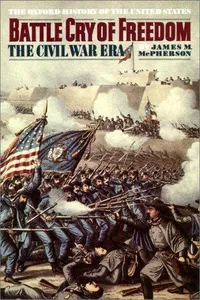
Battle Cry of Freedom: The Civil War Era
James M. McPherson · 1989 · 946 pp
Filled with fresh interpretations and information, puncturing old myths and challenging new ones, Battle Cry of Freedom will unquestionably become the standard one-volume history of the Civil War. James McPherson's fast-paced narrative fully integrates the political, social, and military events that crowded the two decades from the outbreak of one war in Mexico to the ending of another at Appomattox. Packed with drama and analytical insight, the book vividly recounts the momentous episodes that preceded the Civil War--the Dred Scott decision, the Lincoln-Douglas debates, John Brown's raid on Harper's Ferry--and then moves into a masterful chronicle of the war itself--the battles, the strategic maneuvering on both sides, the politics, and the personalities. Particularly notable are McPherson's new views on such matters as the slavery expansion issue in the 1850s, the origins of the Republican Party, the causes of secession, internal dissent and anti-war opposition in the North and the South, and the reasons for the Union's victory. The book's title refers to the sentiments that informed both the Northern and Southern views of the conflict: the South seceded in the name of that freedom of self-determination and self-government for which their fathers had fought in 1776, while the North stood fast in defense of the Union founded by those fathers as the bulwark of American liberty. Eventually, the North had to grapple with the underlying cause of the war--slavery--and adopt a policy of emancipation as a second war aim. This "new birth of freedom," as Lincoln called it, constitutes the proudest legacy of America's bloodiest conflict. This authoritative volume makes sense of that vast and confusing "second American Revolution" we call the Civil War, a war that transformed a nation and expanded our heritage of liberty.

Parting the Waters: America in the King Years 1954-1963
Taylor Branch · 1989
Chronicles the civil rights struggle from the twilight of the Eisenhower years through the assassination of President Kennedy.